The concept of a 'smart home' has evolved dramatically, transforming from a futuristic fantasy into an everyday reality for millions. In 2026, one area experiencing an unprecedented surge in innovation is home security, largely thanks to the integration of artificial intelligence. We at TrendPulsee have been closely monitoring this space, and our analysis suggests that AI smart home security is not just a buzzword; it's the bedrock of next-generation protection.
Gone are the days when a home security system merely triggered an alarm when a door opened. Today, AI-powered systems are learning, adapting, and even predicting threats, offering a level of peace of mind previously unattainable. This isn't just about cameras; it's about a holistic, intelligent ecosystem safeguarding your sanctuary. [Related: smart home devices 2026]
What is AI Smart Home Security and How Does it Work?
AI smart home security refers to security systems that leverage artificial intelligence and machine learning algorithms to enhance their detection, monitoring, and response capabilities. Unlike traditional systems that rely on simple triggers (e.g., a door opening, motion detection), AI systems can interpret complex data from various sensors, cameras, and microphones to make intelligent decisions.
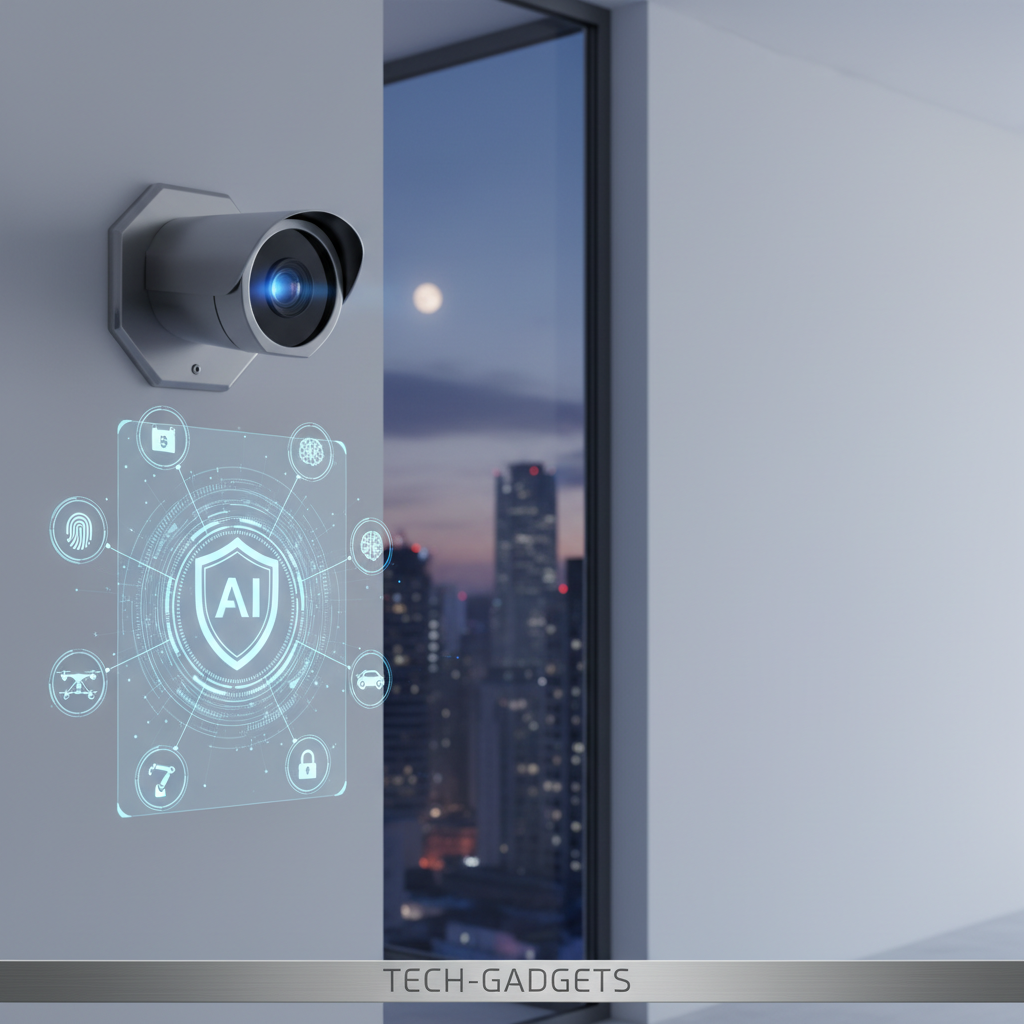
At its core, AI in home security works by processing vast amounts of data. For instance, an AI home surveillance camera doesn't just detect motion; it can differentiate between a pet, a falling leaf, and a human intruder. This is achieved through sophisticated algorithms trained on massive datasets of images and videos. When an anomaly is detected, the AI can then trigger specific actions, such as sending a detailed alert to your smartphone, activating a spotlight, or even communicating with emergency services.
Key components often include:
- Advanced Sensors: Beyond standard motion and contact sensors, these include environmental sensors (smoke, CO, water leaks) and even biometric security features like fingerprint or facial recognition for access control.
- Smart Cameras: Equipped with computer vision, these cameras offer features like person detection, package detection, facial recognition, and even anomaly detection, learning typical patterns of activity around your home.
- Machine Learning (ML) Algorithms: These algorithms continuously learn from data, improving the system's accuracy over time and reducing false alarms.
- Cloud and Edge Computing: While some processing happens in the cloud, an increasing trend in 2026 is edge computing, where AI processing occurs directly on the device, enhancing speed and data privacy.
The Transformative Benefits of AI in Home Security
The integration of AI brings a multitude of benefits that redefine what we expect from home security. The most significant advantage is the drastic reduction in false positives. According to a 2025 report by Security Today, false alarms account for over 90% of police dispatches for security systems, costing municipalities billions annually. AI helps mitigate this by accurately identifying genuine threats. "AI is moving us from reactive security to proactive, even predictive security," notes Dr. Kenji Tanaka, a leading expert in artificial intelligence at Tokyo University. "It's about understanding context, not just detecting events."
Here are some core benefits:
Predictive Home Security
AI systems are moving beyond mere detection to anticipation. By analyzing patterns in your home's activity, local crime data, and even weather forecasts, these systems can identify potential vulnerabilities or unusual behaviors before they escalate into a threat. For example, if a camera repeatedly detects an unknown vehicle idling near your property at odd hours, the system might flag it as suspicious, even if no direct intrusion has occurred. This is the essence of predictive home security.
Enhanced Detection and Identification
Modern AI home surveillance cameras can distinguish between a squirrel and a human, or even a familiar face from an unknown one. This means fewer notifications about harmless events and more critical alerts about genuine concerns. Some systems can even identify specific individuals, allowing for personalized access control or alerting you when a child arrives home from school.
Seamless Integration and Automation
AI acts as the brain for your entire smart home ecosystem. It can integrate with smart lighting, locks, thermostats, and even voice assistants. If an intrusion is detected, the AI can automatically lock doors, turn on all lights, sound an alarm, and send a live video feed to your phone. This level of home automation provides comprehensive protection and convenience. [Related: matter smart home standard]
Data Privacy and Local Processing
With growing concerns around data privacy, leading AI security providers are prioritizing local processing (edge AI). This means sensitive video and audio data are analyzed on the device itself, rather than being sent entirely to the cloud. This significantly reduces the risk of data breaches and ensures that personal information remains within your home network. We expect this trend to accelerate significantly through 2026 and beyond. [Related: privacy in smart tech]
Top AI Smart Home Security Systems for 2026
The market for smart home security systems is competitive, but a few players are distinguishing themselves with cutting-edge AI capabilities, particularly for the discerning Japanese consumer who values both innovation and privacy. Here’s our analysis of the top contenders for 2026:
1. Arlo Ultra 4 AI (with Arlo Secure Plan)
- Unique AI Features: Arlo's latest generation boasts advanced object detection (person, vehicle, animal, package), custom activity zones, and CVR (Continuous Video Recording) with intelligent event filtering. Its AI can differentiate between a delivery driver and a potential intruder with high accuracy. The new Ultra 4 offers 4K HDR video and color night vision.
- Ease of Installation: DIY-friendly, wireless cameras with magnetic mounts. Requires a SmartHub for local storage and extended battery life.
- Subscription Model: Arlo Secure plans (Essential, Premium, Elite) are necessary to unlock most AI features, cloud storage, and interactive notifications. Local storage is available via the SmartHub.
- Data Privacy: Emphasizes local processing for initial detection, with encrypted cloud storage for recordings. Strong commitment to user data protection, with servers located in regions compliant with strict data regulations.
2. Ring Always Home Cam (with Ring Protect Plus)
- Unique AI Features: While still in limited release, the Always Home Cam's drone-like autonomous navigation within the home is unparalleled. Its AI maps your home and can patrol pre-set paths, responding to disturbances. It integrates with other Ring devices for a comprehensive ecosystem. Person detection and facial recognition are standard across Ring's camera lineup.
- Ease of Installation: The Always Home Cam is more complex due to its mapping requirements but is designed for user setup. Other Ring devices are very DIY-friendly.
- Subscription Model: Ring Protect Plus is essential for video recording, extended warranties, and professional monitoring options.
- Data Privacy: Ring (an Amazon company) has faced scrutiny but has significantly enhanced its privacy features, including end-to-end encryption for video and strict data access controls. Local processing is limited, with most AI occurring in the cloud.
3. Google Nest Cam (Battery) & Nest Hub Max (with Nest Aware Plus)
- Unique AI Features: Google's AI excels in familiar face detection, sound detection (glass breaking, smoke alarm), and activity zones. The Nest Hub Max acts as a central display and an additional AI camera. Its AI is particularly good at distinguishing between different types of sounds and providing rich notifications.
- Ease of Installation: Very straightforward DIY installation. Battery-powered cameras offer flexibility.
- Subscription Model: Nest Aware and Nest Aware Plus unlock 24/7 CVR, familiar face alerts, and extended event history. Without it, features are significantly limited.
- Data Privacy: Google leverages its vast AI infrastructure. While powerful, this means significant cloud processing. They offer robust security protocols and transparency reports, but users should be aware of Google's data handling practices. Local processing for basic detection is present.
4. Eufy Security (e.g., eufyCam 3 with HomeBase 3)
- Unique AI Features: Eufy is a standout for its commitment to local AI processing and no mandatory subscription fees. The HomeBase 3 features BionicMind™ AI, which offers self-learning facial recognition, human/pet/vehicle detection, and even differentiates between family members and strangers. It also supports cross-camera tracking.
- Ease of Installation: Extremely easy DIY setup. Wireless cameras with long battery life.
- Subscription Model: No monthly fees for AI features or local video storage (up to 16TB with HomeBase 3 expansion). Optional cloud storage is available.
- Data Privacy: Eufy emphasizes privacy with local AI processing and encrypted local storage. This is a significant draw for privacy-conscious consumers, minimizing data sent to the cloud.
5. Abode Security System (with Abode Cam 2 & Professional Monitoring)
- Unique AI Features: Abode offers a comprehensive DIY smart home security system with a focus on professional monitoring and smart home integration. Its AI-powered Abode Cam 2 includes person detection, package detection, and pet detection. The system shines in its ability to integrate with a wide array of Z-Wave and Zigbee devices, allowing for complex automation rules triggered by AI events.
- Ease of Installation: Modular and DIY-friendly, but can be scaled up to professional installation if desired.
- Subscription Model: Basic self-monitoring is free, but professional monitoring and advanced AI features (like extended cloud storage and cellular backup) require a plan.
- Data Privacy: Abode processes much of its AI data in the cloud but adheres to strong encryption standards. They offer clear privacy policies and allow users control over data sharing preferences.
The Future of Smart Home Security: Beyond 2026
Looking ahead, home security trends 2026 point towards even more sophisticated AI integration. We anticipate a greater emphasis on proactive and preventative measures. Imagine systems that can detect changes in Wi-Fi signals to identify unusual movement within walls, or drones that autonomously patrol your property perimeter. The convergence of AI, IoT security, and advanced sensor technology will lead to truly invisible yet omnipresent protection.
Biometric security will become more commonplace, extending beyond fingerprint readers to include iris scans and even gait analysis for entry. Cybersecurity will also be paramount, with AI-driven defenses protecting the smart home network itself from digital threats. [Related: IoT security trends]
Our analysis suggests that the next-gen smart security systems will not only protect your home but also learn your habits, anticipate your needs, and seamlessly integrate into your daily life, becoming an indispensable guardian. The goal is to create an environment where security is effortless, intelligent, and virtually invisible until it's needed.
Key Takeaways
- AI smart home security uses machine learning to offer intelligent detection, reducing false alarms and enhancing accuracy.
- Benefits include predictive home security, advanced object identification, seamless home automation, and improved data privacy through local processing.
- Top systems like Arlo, Ring, Google Nest, Eufy, and Abode are leading the charge with unique AI features.
- Subscription models vary, with some offering robust features for free (Eufy) and others requiring plans for full functionality.
- Data privacy and local processing are increasingly important factors for consumers, with companies like Eufy excelling in this area.
- The future promises even more proactive, integrated, and invisible security solutions.
Conclusion
The landscape of home security is undergoing a profound transformation, with AI at its helm. As we navigate 2026 and look towards the horizon, it's clear that AI smart home security is no longer a luxury but a fundamental component of modern living. These systems offer unparalleled peace of mind, not just by reacting to threats, but by intelligently anticipating and preventing them. For homeowners in Japan and globally, investing in an AI-powered security system is an investment in a smarter, safer, and more secure future. The era of truly intelligent home protection has arrived, and it's only getting smarter.
Key Takeaways
- •This article covers the most important insights and trends discussed above
Sources & References
TrendPulsee
Tech journalist and content creator