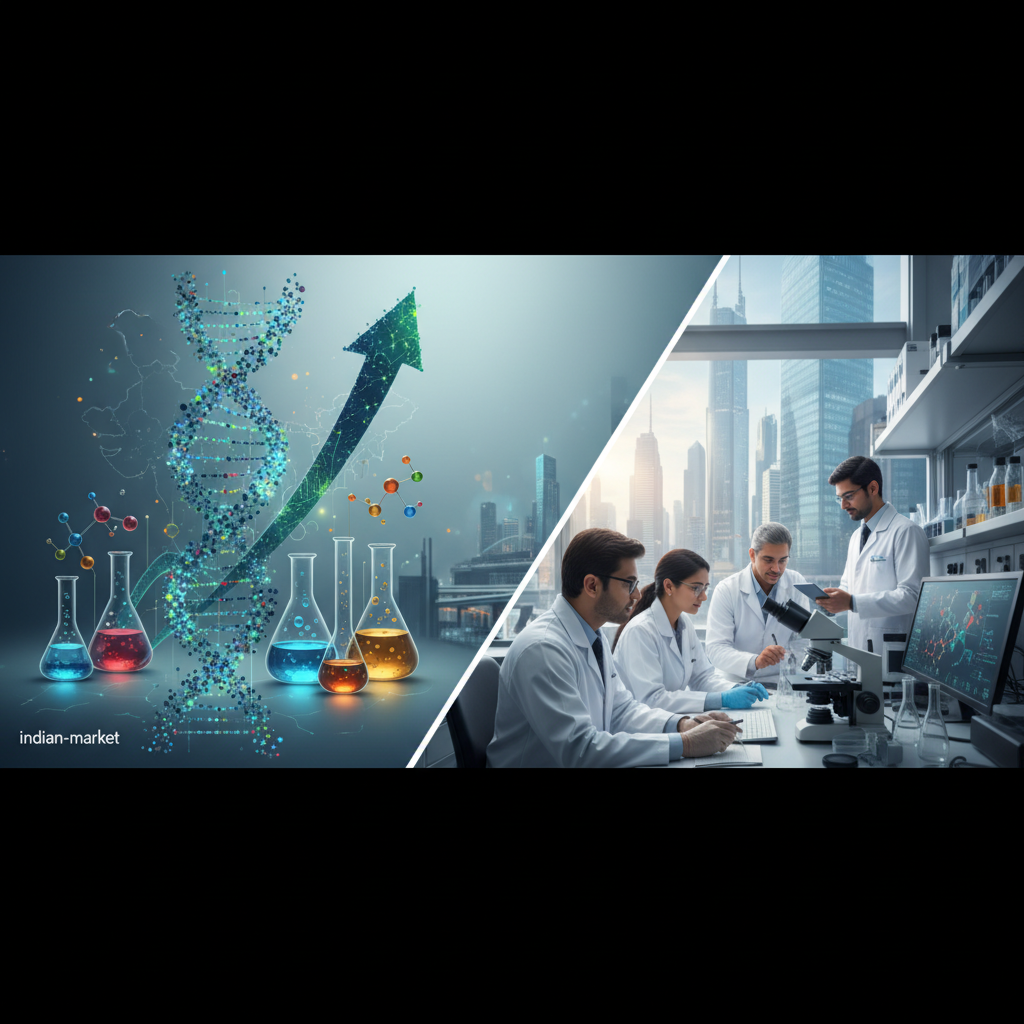
Quick Summary
- India's Pharma Ascent: Shifting from generic manufacturing to a global innovation and R&D powerhouse.
- AI & Analytics: Indian companies are leveraging advanced tech for drug discovery, accelerating development.
- Global Manufacturing Hub: Government policies and post-pandemic realignments solidify India's position.
- Future Prospects: Strong growth projected for exports and complex drug development, despite challenges.
In an era defined by rapid technological advancement and geopolitical shifts, the Indian pharmaceutical industry outlook for 2026 presents a compelling narrative of transformation and ambition. Once primarily known as the "pharmacy of the world" for its prowess in generic drug manufacturing, India is now aggressively pivoting towards becoming a global hub for pharmaceutical innovation, research, and development (R&D). This isn't just an incremental shift; it's a strategic evolution driven by significant investments, policy support, and a burgeoning ecosystem of scientific talent.
Our analysis suggests that the sector is poised for unprecedented growth, fueled by a dual focus: maintaining its dominance in affordable generics while simultaneously making significant strides in complex drugs, biosimilars, and novel drug discovery. This dual approach positions India uniquely on the global stage, offering both cost-effectiveness and cutting-edge science.
What Drives the Indian Pharmaceutical Industry Outlook for Innovation?
The Indian pharmaceutical industry outlook is profoundly shaped by a concerted push towards R&D, moving beyond traditional generic formulations. This strategic pivot is underpinned by several key drivers, including a robust talent pool, increasing private sector investment, and supportive government policies. The goal is clear: to transition from being merely a manufacturer to an innovator.
Historically, Indian pharma's R&D expenditure hovered around 5-6% of sales, primarily focused on process innovation for generics. However, this trend is changing dramatically. Leading Indian pharma companies are now allocating significantly more towards R&D, with some exceeding 10-12% of their revenues, targeting new chemical entities (NCEs), biosimilars, and complex generics. This increased investment is critical for fostering Indian pharma R&D growth.
The AI and Advanced Analytics Revolution in Drug Discovery
A significant factor accelerating this R&D growth is the enthusiastic adoption of Artificial Intelligence (AI) and advanced analytics. Indian pharmaceutical companies are no longer just spectators; they are actively integrating these technologies into various stages of drug discovery and development. AI is being deployed for target identification, lead optimization, predicting drug toxicity, and even streamlining clinical trial design.
For instance, companies like Dr. Reddy's Laboratories and Sun Pharmaceutical Industries are exploring partnerships and in-house capabilities to leverage AI for data-driven insights. Startups in the Indian healthcare tech ecosystem are also contributing significantly, offering specialized AI platforms that can analyze vast biological datasets to identify potential drug candidates faster and more efficiently. This shift is crucial for reducing the time and cost associated with bringing new drugs to market, giving Indian firms a competitive edge.
How is India Becoming a Global Pharma Manufacturing Hub?
India's journey to becoming a global manufacturing hub for pharma is a testament to its inherent strengths and strategic policy interventions. The COVID-19 pandemic served as a critical catalyst, exposing vulnerabilities in global supply chains and prompting nations to diversify their manufacturing bases. India, with its established infrastructure, skilled workforce, and cost efficiencies, was perfectly positioned to capitalize on this realignment.
The country already boasts the largest number of US FDA-approved manufacturing facilities outside the U.S., underscoring its adherence to international quality standards. This robust manufacturing base is a cornerstone of the pharmaceutical sector India analysis. The government's Production Linked Incentive (PLI) schemes for pharmaceuticals, particularly for Active Pharmaceutical Ingredients (APIs) and Key Starting Materials (KSMs), have been instrumental. These schemes aim to reduce India's reliance on imports, particularly from China, and boost domestic manufacturing capabilities across the value chain. Read more: Medical Device Manufacturing India: A Growth Story [blocked]
Bolstering API Production and Complex Generics
The focus on API production is a game-changer. By strengthening its backward integration, India enhances its supply chain resilience and reduces dependency. Companies like Divi's Laboratories and Aurobindo Pharma are expanding their API capacities, ensuring a stable supply of crucial ingredients for both domestic and international markets. This vertical integration is not only about quantity but also about quality and regulatory compliance, solidifying India's reputation as a reliable supplier.
Furthermore, the shift towards complex generics and biosimilars requires advanced manufacturing capabilities and stringent quality control. Indian companies are investing heavily in specialized facilities for injectables, ophthalmic products, and biologics, moving up the value chain from simple oral solids. This strategic move aligns with the broader India pharma market trends, indicating a maturation of the industry.
Growth Projections for Indian Pharma Exports
The Indian pharmaceutical industry outlook for exports remains exceptionally strong, with ambitious targets set for the coming years. India's pharma exports reached approximately US$25.3 billion in FY 2023-24, and projections indicate continued double-digit growth. The government aims to achieve US$100 billion in pharma exports by 2030, a testament to the sector's potential and global demand for Indian-made medicines.
| Export Category | Key Growth Drivers | Target Markets | Contribution to Exports (Approx.) |
|---|---|---|---|
| Generic Formulations | Cost-effectiveness, large volume manufacturing, regulatory compliance | North America, Europe, Africa, LATAM | 70-75% |
| APIs | PLI schemes, reduced import reliance, global supply chain diversification | Europe, US, Japan | 15-20% |
| Biosimilars | R&D investments, increasing global demand for affordable biologics | Developed markets (US, EU), emerging markets | 5-10% |
| Vaccines | Pandemic preparedness, global health initiatives, manufacturing capacity | Global (COVAX, UN agencies, bilateral deals) | 2-5% |
This robust growth is driven by several factors: increasing demand for affordable medicines worldwide, India's strong regulatory compliance, and its expanding product portfolio to include more complex and high-value drugs. Pharma exports from India are diversifying geographically, with a stronger presence in regulated markets like the US and Europe, alongside continued dominance in emerging economies.
What Challenges Does the Indian Pharmaceutical Sector Face?
Despite the optimistic Indian pharmaceutical industry outlook, the sector is not without its hurdles. Navigating these challenges effectively will be crucial for sustained growth and achieving its ambitious goals.
Regulatory Scrutiny and Quality Control
As India aims for higher-value markets, it faces intensified regulatory scrutiny from agencies like the US FDA and EMA. Maintaining impeccable quality control and compliance across all manufacturing facilities is paramount. Any lapses can lead to import alerts, reputational damage, and significant financial penalties. Continuous investment in quality systems, training, and robust manufacturing practices is non-negotiable.
Intellectual Property Rights and Data Protection
While India has a strong IP framework, concerns occasionally arise regarding its enforcement, particularly from innovator companies. As Indian firms venture into novel drug discovery, a more robust and consistently enforced intellectual property rights regime becomes even more critical to protect their innovations and attract global collaborations. Read more: Intellectual Property Rights in Pharma: Protecting Innovation [blocked]
Talent Gap and Skill Development
The rapid evolution towards complex manufacturing, biosimilars, and AI-driven R&D necessitates a highly skilled workforce. There is a growing need for talent in specialized areas such as bioinformatics, data science, biologics manufacturing, and advanced analytical chemistry. Bridging this skill gap through academic-industry collaborations and continuous upskilling programs is vital for sustaining Indian pharma R&D growth.
Key Takeaways
- Innovation-Driven Growth: India is strategically shifting from a generics-first model to a significant player in R&D, biosimilars, and novel drug discovery.
- AI Integration: Advanced analytics and AI are becoming integral to accelerating drug discovery and development processes across the industry.
- Global Manufacturing Powerhouse: Government support via PLI schemes and a focus on API production are solidifying India's position as a resilient and reliable global pharma manufacturing hub.
- Export Ambition: Strong growth projections aim for India to achieve US$100 billion in pharma exports by 2030, driven by diverse product portfolios and market reach.
- Challenges Remain: Regulatory compliance, IP protection, and talent development are critical areas requiring continuous attention and investment.
Frequently Asked Questions (FAQ)
How significant is AI in India's pharma R&D today?
AI is becoming increasingly significant, with leading Indian pharmaceutical companies actively investing in AI platforms and partnerships. It's used for everything from identifying potential drug targets and optimizing lead compounds to predicting clinical trial outcomes, significantly speeding up the R&D cycle and reducing costs.
Which government policies are most impactful for Indian pharma?
The Production Linked Incentive (PLI) schemes for pharmaceuticals, especially those targeting Active Pharmaceutical Ingredients (APIs) and Key Starting Materials (KSMs), are highly impactful. These policies aim to boost domestic manufacturing, reduce import dependence, and enhance India's self-reliance in critical drug components.
What are the main growth areas for Indian pharma exports?
While generic formulations continue to dominate, significant growth is projected in complex generics, biosimilars, and APIs. There's also increasing demand for Indian-made vaccines and specialized therapeutic segments, reflecting the industry's move up the value chain.
What This Means For You
For global healthcare providers, this means a more diversified and robust supply chain, with India offering not just affordable generics but also increasingly sophisticated and innovative pharmaceutical products. For investors, the Indian pharmaceutical industry outlook points to a sector ripe with growth opportunities, particularly in companies embracing R&D and advanced technologies. For patients worldwide, it translates to continued access to high-quality, affordable medicines, alongside the promise of new treatments emerging from India's growing innovation ecosystem.
Bottom Line
The Indian pharmaceutical industry outlook for 2026 and beyond is characterized by an exciting blend of continuity and change. While its foundational strength in generic manufacturing remains, the strategic shift towards R&D, innovation, and advanced technologies like AI marks a new chapter. India is not just aspiring to be the "pharmacy of the world"; it is rapidly becoming a global pharmaceutical innovation partner. The coming years will undoubtedly see India solidify its position not just as a manufacturing powerhouse, but as a crucial contributor to global drug discovery and healthcare advancements.
Key Takeaways
- •This article covers the most important insights and trends discussed above
Sources & References
TrendPulsee
Tech journalist and content creator