By TrendPulsee Staff | Published February 26, 2026 | Updated February 26, 2026
TL;DR: Quick Summary
- AI Agents are Here: Autonomous AI systems are moving beyond basic automation, performing complex tasks and learning independently.
- Game-Changer for SMBs: Small businesses and solopreneurs can leverage AI agents for unprecedented productivity, cost savings, and competitive advantage.
- Practical Applications: From customer service to marketing and coding, AI agents offer tangible, easy-to-integrate solutions.
- Future of Work: Expect a collaborative human-AI workforce, demanding new skills and ethical considerations.
Is your business ready for a workforce that never sleeps, learns continuously, and executes tasks with unparalleled precision? The answer, increasingly, is yes. We're not talking about advanced robotics on an assembly line, but rather the silent, digital revolution unfolding in our virtual offices and cloud servers: the rise of AI agents. These intelligent systems are no longer a futuristic concept; they are a present-day reality, fundamentally reshaping how businesses operate, innovate, and compete in 2026.
For years, artificial intelligence promised to automate mundane tasks. Now, with the advent of sophisticated large language models (LLMs) and advanced machine learning, AI has evolved. We are witnessing the emergence of truly autonomous AI systems capable of understanding goals, planning actions, executing them, and even self-correcting. This isn't just about chatbots anymore; it's about digital colleagues that can manage projects, analyze markets, and even write code with minimal human oversight. Our analysis suggests that this shift represents one of the most significant digital transformations since the internet itself.
What Exactly Are AI Agents and How Do They Work?
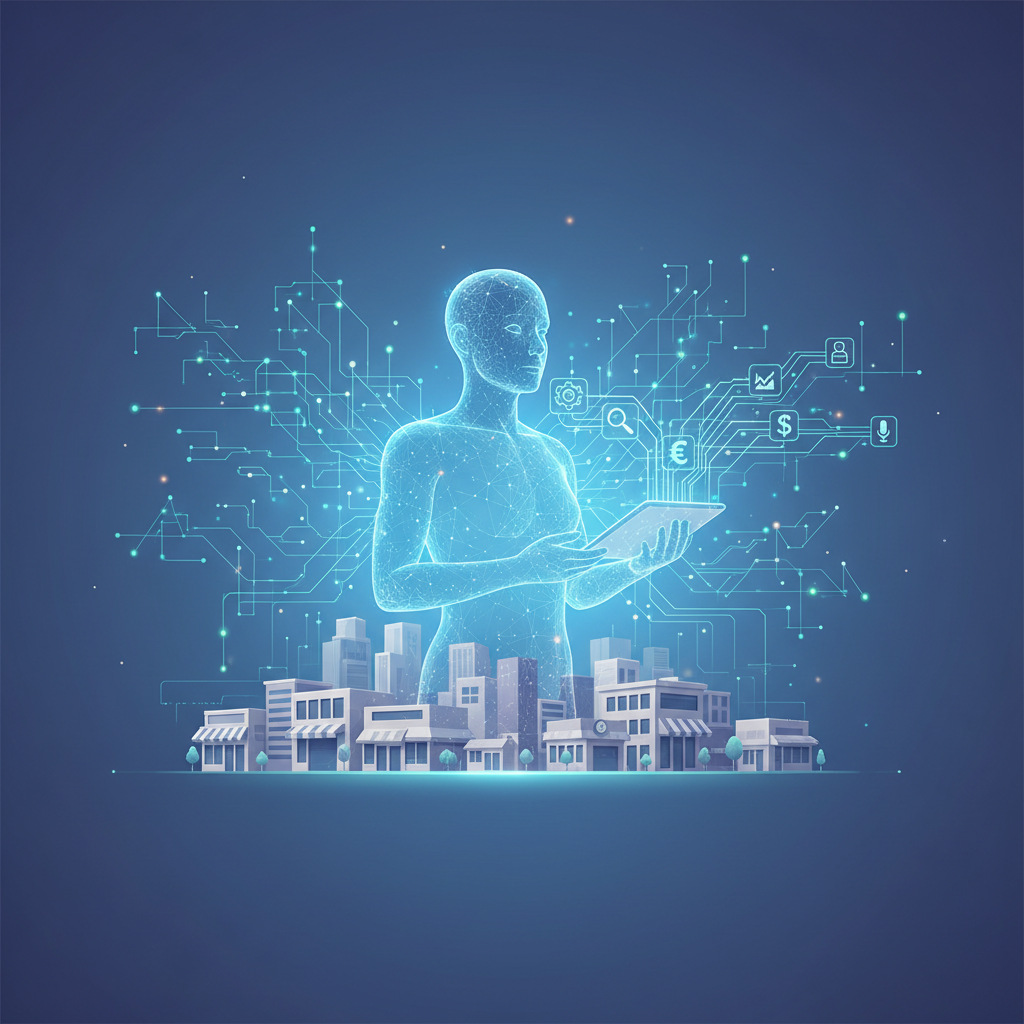
AI agents are sophisticated software programs designed to perceive their environment, make decisions, and take actions autonomously to achieve specific goals. Unlike traditional automation scripts that follow predefined rules, intelligent agents leverage advanced artificial intelligence, including machine learning and natural language processing, to adapt, learn, and operate with a degree of independence. They are essentially digital entities with a purpose, capable of executing complex tasks that previously required human intervention.
At their core, AI agents operate through a continuous loop of perception, reasoning, and action. They perceive information from their digital environment (e.g., emails, databases, web pages), reason about this information to understand the current state and identify next steps towards a goal, and then act upon that reasoning (e.g., send an email, update a spreadsheet, generate content). This process is often powered by advanced models like GPT-4 or similar, allowing them to understand context and generate human-like responses or actions. Many of these agents also incorporate a 'memory' function, enabling them to retain information from past interactions and improve their performance over time. This continuous learning is what truly differentiates them from simpler AI tools.
The Anatomy of an Intelligent Agent
An intelligent agent typically comprises several key components:
- Perception: Sensors (digital inputs) gather data from the environment.
- Reasoning: A 'brain' (often an LLM combined with other algorithms) processes this data, understands context, and plans actions.
- Action: Effectors (digital outputs) execute tasks based on the reasoning.
- Memory: Stores past experiences and learned information to improve future performance.
- Goal: A clearly defined objective the agent strives to achieve.
Consider an AI agent designed to manage your social media. It perceives trends, reasons about optimal posting times and content, acts by scheduling posts, remembers what performed well, and aims to maximize engagement. This iterative process allows for continuous improvement, making it an invaluable asset for any growing business.
Game-Changing Impact: AI Agents in the Workplace for SMBs
The impact of AI agents on jobs and business operations is profound, particularly for small businesses and solopreneurs looking to scale without massive capital investment. These autonomous systems are not just replacing repetitive tasks; they are augmenting human capabilities, creating new roles, and fostering unprecedented levels of productivity. The World Economic Forum's 2023 Future of Jobs Report predicted that 75% of companies are expected to adopt AI, machine learning, and big data analytics by 2027, with many of these adoptions manifesting as intelligent agent deployments.
For small businesses, the primary benefit lies in democratizing access to high-level capabilities. Previously, only large corporations could afford dedicated teams for market research, complex data analysis, or personalized customer outreach. Now, an AI agent can perform these functions at a fraction of the cost, allowing SMBs to compete on a more level playing field. This is not about eliminating jobs entirely, but rather about shifting the focus of human work towards more strategic, creative, and interpersonal tasks. Related: The Future of Work: How AI is Reshaping Industries [blocked]
Practical Applications: Examples of AI Agents in Business
Let's look at concrete ways AI agents are already being deployed:
- Customer Service & Support: Beyond basic chatbots, AI agents can handle complex queries, process returns, troubleshoot issues, and even proactively reach out to customers based on their behavior. Tools like Intercom's Fin or custom-built agents using OpenAI's Assistants API can provide 24/7 support, drastically reducing response times and improving customer satisfaction.
- Marketing & Sales: Imagine an agent that analyzes market trends, identifies target audiences, generates personalized ad copy, schedules campaigns, and even optimizes bidding strategies across platforms. Companies like HubSpot are integrating AI agents to automate lead nurturing, content creation, and sales outreach, freeing up human teams for high-value client relationships.
- Content Creation & Management: From drafting blog posts and social media updates to summarizing lengthy reports and translating content, AI agents are becoming indispensable. Tools like Jasper.ai or Copy.ai, when integrated with autonomous workflows, can manage entire content pipelines, ensuring consistent output and brand voice.
- Data Analysis & Reporting: AI agents can sift through vast datasets, identify patterns, generate actionable insights, and compile comprehensive reports, all without human intervention. This is crucial for solopreneurs who need to understand their business performance but lack the time for manual analysis.
- Software Development & IT: Autonomous agents are now capable of writing, testing, and debugging code. GitHub Copilot is a well-known example, but more advanced agents can take a high-level request (
Key Takeaways
- •This article covers the most important insights and trends discussed above
Sources & References
TrendPulsee
Tech journalist and content creator