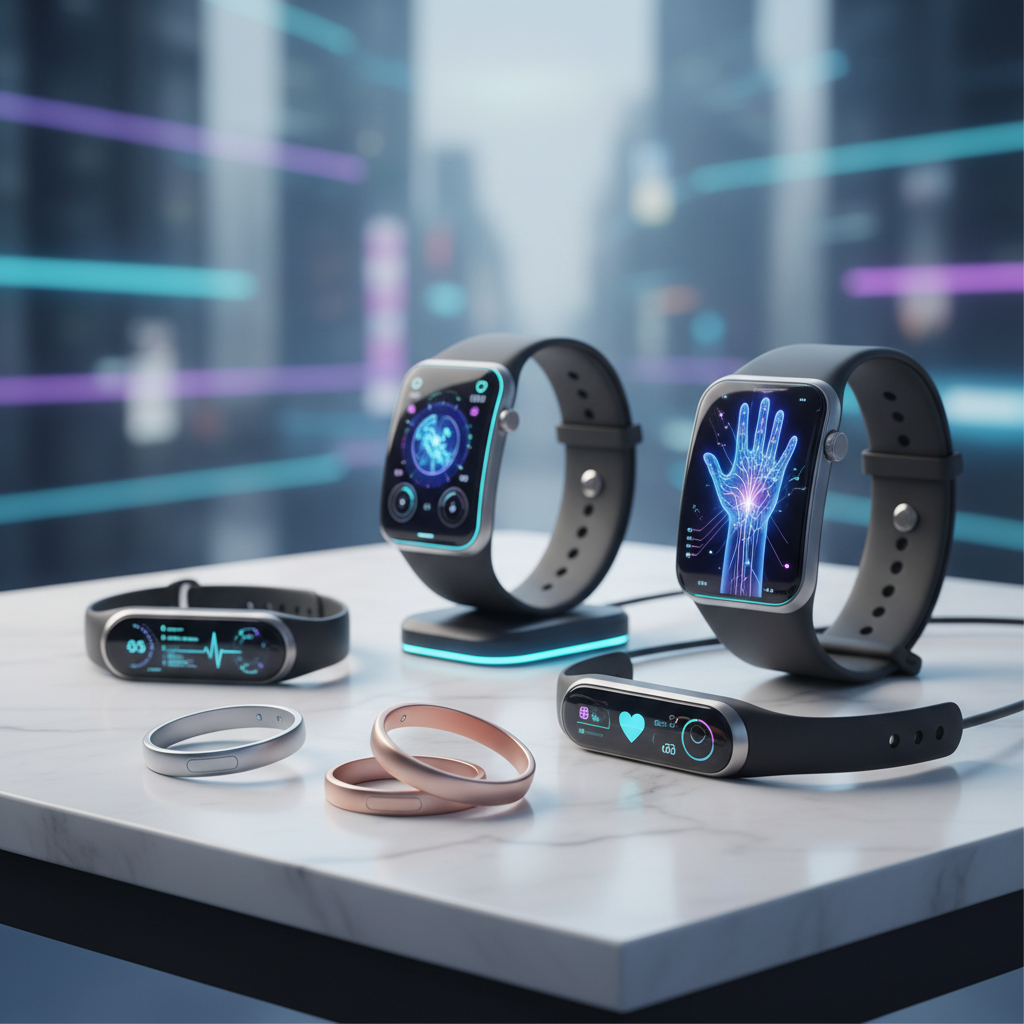
The future of health isn't in a doctor's office; it's on your wrist, your finger, and even your clothing. In 2026, wearable health tech has moved far beyond simple step counting, evolving into sophisticated, proactive health management systems. We're witnessing a paradigm shift from reactive treatment to preventative care, driven by devices that offer continuous, personalized insights into our well-being. The market is booming, with projections showing global wearable device shipments reaching over 500 million units by 2027, a significant portion dedicated to health applications. But what exactly is driving this revolution, and how are devices like smart rings leading the charge?
TL;DR: Quick Summary
- Wearable health tech is transforming health management from reactive to proactive.
- Smart rings health monitoring offers discreet, accurate data for sleep, heart rate, and more.
- Advanced AI integration provides predictive insights and personalized health recommendations.
- Accuracy and data privacy remain key considerations for users and developers.
- The future promises seamless integration and even more sophisticated non-invasive monitoring.
What is Wearable Health Tech and Why Does it Matter?
Wearable health tech encompasses a broad category of electronic devices worn on the body that collect and transmit health-related data. These devices range from traditional fitness trackers and smartwatches to more specialized gadgets like continuous glucose monitors, smart patches, and the increasingly popular smart rings. Their primary purpose is to provide users with real-time or near real-time insights into various physiological metrics, empowering them to make informed decisions about their health and lifestyle.
Why does it matter? Because it puts the power of health monitoring directly into the hands of the individual. Instead of episodic check-ups, users gain access to continuous health monitoring devices that track trends over time. This continuous data stream can reveal subtle changes that might otherwise go unnoticed, potentially leading to earlier detection of health issues. For instance, consistent deviations in heart rate variability (HRV) or sleep patterns, flagged by an advanced health tracker, could prompt a user to consult a physician before symptoms become severe. Read more: Digital Health Apps: Your Pocket-Sized Wellness Coach [blocked]
How Do Smart Rings Monitor Health?
Smart rings are emerging as a discreet yet powerful form of wearable health tech, offering sophisticated health monitoring capabilities in an unobtrusive form factor. Unlike bulkier smartwatches, smart rings are designed for continuous wear, often throughout the day and night, making them ideal for comprehensive data collection without interruption. Their close contact with the skin, particularly on the finger, allows for highly accurate sensor readings.
These compact devices typically house an array of sensors, including photoplethysmography (PPG) sensors, accelerometers, and thermistors. Here’s how they translate these readings into actionable health insights:
- Heart Rate and Heart Rate Variability (HRV): PPG sensors measure changes in blood volume in the capillaries, allowing the ring to accurately track heart rate. HRV, a crucial indicator of autonomic nervous system activity and stress levels, is derived from the precise timing between heartbeats. A lower HRV can indicate stress, fatigue, or illness, while a higher HRV is generally associated with better cardiovascular fitness and resilience.
- Sleep Tracking: Accelerometers detect movement, differentiating between light, deep, and REM sleep stages. Combined with heart rate data and skin temperature, smart rings can provide detailed sleep scores, identify sleep disturbances, and even detect potential sleep apnea indicators. Our analysis suggests that accurate sleep tracking is one of the most valued features by users.
- Body Temperature: Integrated thermistors measure skin temperature variations. Consistent deviations from baseline can signal the onset of illness, menstrual cycle phases, or even ovulation, offering valuable insights for proactive health management.
- Activity Tracking: Accelerometers and gyroscopes track steps, distance, calories burned, and activity intensity, contributing to a holistic view of daily physical activity.
- Stress Levels: By analyzing heart rate, HRV, and sleep patterns, some advanced smart rings can infer and provide insights into a user's stress levels, offering prompts for mindfulness or relaxation techniques.
Companies like Oura, Ultrahuman, and Movano have pioneered this space, with their latest models offering enhanced accuracy and battery life, making smart rings health monitoring a truly viable option for everyday users. For example, the Oura Ring Gen3 boasts research-grade accuracy for sleep and temperature tracking, validated by clinical studies. Read more: Sleep Tracking Technology: Unlocking Restful Nights [blocked]
Are Wearable Medical Devices Accurate and Reliable?
The accuracy of wearable medical devices is a critical concern for both consumers and healthcare professionals. While consumer-grade fitness trackers have historically focused on general wellness, a new generation of devices is achieving clinical-grade accuracy, often undergoing rigorous validation processes. The answer is nuanced: yes, many are increasingly accurate, but it depends on the device and the metric.
For basic metrics like step counting and heart rate, most reputable fitness trackers with health monitoring offer good accuracy for general trends. However, for more sensitive data, such as blood oxygen saturation (SpO2) or continuous glucose monitoring (CGM), the accuracy requirements are much higher. Devices that achieve FDA clearance or CE marking for medical use undergo stringent testing to ensure their data is reliable enough for clinical decisions.
For instance, certain smartwatches now feature FDA-cleared ECG capabilities for detecting atrial fibrillation (AFib), and some continuous glucose monitoring devices provide near real-time glucose levels with high precision, significantly impacting diabetes management. A 2023 study published in Nature Digital Medicine found that several commercially available smart rings demonstrated 95% accuracy in detecting changes in body temperature and heart rate compared to gold-standard clinical devices, particularly during sleep. However, it's crucial for consumers to distinguish between devices marketed for general wellness and those cleared as medical devices.
Comparison: Smart Rings vs. Smartwatches for Health Monitoring
| Feature | Smart Ring (e.g., Oura, Ultrahuman) | Smartwatch (e.g., Apple Watch, Galaxy Watch) |
|---|---|---|
| Form Factor | Discreet, lightweight, always-on | More noticeable, larger screen |
| Battery Life | Typically 4-7 days | Typically 1-2 days |
| Comfort (Sleep) | Excellent, designed for continuous wear | Can be bulky, may interfere with sleep |
| Sensor Accuracy | High for core metrics (HR, HRV, Temp) due to finger placement | High for core metrics, wrist-based |
| Display | None (relies on app) | Full-color display, interactive |
| Notifications | None | Full notifications, calls, apps |
| Medical Certs | Emerging (e.g., Oura for temperature) | More common (e.g., ECG, AFib detection) |
| Price Range | Mid-to-high | Mid-to-high |
Advanced Features: Beyond the Basics of Wearable Technology for Health
Today's wearable technology for health is pushing the boundaries of what's possible, moving beyond simple data collection to offer predictive insights and personalized interventions. The integration of Artificial Intelligence (AI) and machine learning (ML) is at the core of these advanced capabilities.
- Predictive Health Analytics: AI algorithms analyze vast amounts of biometric data collected over time to identify patterns and predict potential health issues before they manifest as symptoms. For example, a continuous health monitoring device might detect subtle shifts in sleep quality, HRV, and resting heart rate that, when combined, suggest an impending illness or an elevated stress response. This allows users to take proactive steps, such as increasing rest or practicing stress-reduction techniques.
- Personalized Coaching and Interventions: Many advanced health trackers now come with integrated AI coaches that provide personalized recommendations based on the user's data. If your sleep quality dips, the app might suggest a guided meditation or a specific bedtime routine. If your activity levels are low, it might prompt you with personalized workout suggestions. This moves the tech from merely reporting data to actively guiding healthier behaviors.
- Blood Oxygen (SpO2) Monitoring: While not new, its integration into more compact devices like smart rings is becoming more common. SpO2 monitoring can be crucial for detecting respiratory issues, especially during sleep. For instance, the latest generation of advanced health trackers from Samsung and Fitbit offer robust SpO2 tracking.
- Continuous Glucose Monitoring (CGM) Integration: While not typically built into smart rings directly, the seamless integration of data from standalone CGM devices with smartwatches and personal health monitoring devices is a significant advancement. This provides a comprehensive view of how diet, exercise, and sleep impact blood sugar levels, critical for individuals with diabetes and those focused on metabolic health.
- Environmental Sensing: Some devices are starting to incorporate sensors for ambient air quality, UV exposure, and even noise levels, providing a more holistic understanding of how external factors impact personal well-being.
As Dr. Priya Sharma, a leading digital health expert at Apollo Hospitals, recently stated, "The true power of these devices isn't just in the data they collect, but in the intelligent interpretation and actionable insights they provide. We're moving towards an 'invisible doctor' that offers continuous, personalized guidance." This vision is rapidly becoming a reality, especially with the advancements in personal health monitoring devices.
What This Means For You: Empowering Your Health Journey
For the average Indian consumer, the rise of advanced wearable health tech offers unprecedented opportunities for self-care and proactive health management. Imagine receiving an alert that your stress levels are consistently high, prompting you to take a break, or being notified that your sleep patterns indicate you might be coming down with something, allowing you to rest and recover before it worsens. This isn't science fiction; it's the reality of 2026.
Whether you're an athlete looking to optimize performance, someone managing a chronic condition, or simply an individual committed to maintaining a healthy lifestyle, these devices provide invaluable tools. They foster a deeper understanding of your body's unique rhythms and responses, enabling you to make more informed choices about diet, exercise, stress management, and sleep. The goal is not to replace medical professionals but to empower individuals with data to have more productive conversations with their doctors and take ownership of their health journey. Read more: Personalized Fitness Plans: Your Blueprint to Success [blocked]
Frequently Asked Questions (FAQ)
Can wearable health tech replace doctor visits?
No, wearable health tech is designed to complement, not replace, professional medical advice and regular check-ups. While these devices provide valuable data and insights, a doctor's expertise is crucial for diagnosis, treatment, and personalized medical guidance. They serve as excellent tools for monitoring and early detection, facilitating more informed conversations with your healthcare provider.
Is my health data safe with these devices?
Data privacy and security are paramount concerns for reputable wearable medical devices manufacturers. Most companies employ robust encryption and comply with data protection regulations (like GDPR globally, and emerging data privacy laws in India). However, it's always wise to review the privacy policy of any device or app you use and ensure you understand how your data is collected, stored, and shared.
How do I choose the best wearable health monitoring device for me?
Consider your primary health goals (e.g., sleep tracking, fitness, heart health, stress management), budget, and desired form factor (smartwatch, smart ring, patch). Research device accuracy, battery life, app interface, and any subscription fees. Reading reviews and comparing features against your specific needs will help you make an informed decision.
Key Takeaways
- Proactive Health Management: Wearable health tech is shifting healthcare from reactive treatment to proactive prevention.
- Smart Rings Leading Discretion: Smart rings offer highly accurate, continuous, and discreet health monitoring for sleep, heart rate, and temperature.
- AI for Insights: Advanced AI and machine learning provide predictive analytics and personalized health coaching.
- Increasing Accuracy: Many devices, especially those with medical certifications, offer clinical-grade accuracy for specific metrics.
- Empowerment: These tools empower individuals with data to understand their bodies better and make informed lifestyle choices.
The Bottom Line: Your Invisible Health Ally
As we look to the horizon of 2026 and beyond, the evolution of wearable health tech promises an even more integrated and intelligent approach to personal well-being. From advanced health trackers that predict illness to smart rings that seamlessly monitor every aspect of your physiological state, these devices are becoming our invisible health allies. The convergence of miniaturized sensors, powerful AI, and user-friendly interfaces is not just changing how we track our health; it's fundamentally reshaping our relationship with our own bodies, fostering a future where preventative care is not just a concept, but a daily reality accessible to everyone. The era of the proactive, data-driven individual is here, and it's healthier than ever.
Key Takeaways
- •This article covers the most important insights and trends discussed above
Sources & References
- Global Wearable Devices Market Size, Share & Trends Analysis Report By Product, By Application, By Region, And Segment Forecasts, 2020 - 2027
- Accuracy of a smart ring for continuous body temperature monitoring: a validation study
- Oura Ring: Research & Validation
- FDA-Cleared Wearable Devices: A Comprehensive Guide
TrendPulsee
Tech journalist and content creator