By Alex Trendsetter | Published February 22, 2026 | Updated February 22, 2026
TL;DR: Quick Summary
- Solid-state batteries are poised to revolutionize EVs with higher energy density, faster charging, and improved safety.
- Faster charging EV solutions are critical for mass adoption, with advancements targeting 10-80% charge in under 15 minutes.
- Key players like QuantumScape, Solid Power, and StoreDot are leading the charge, with prototypes showing immense promise.
- Expect significant commercialization and real-world impact on EV affordability and practicality by 2027-2028.
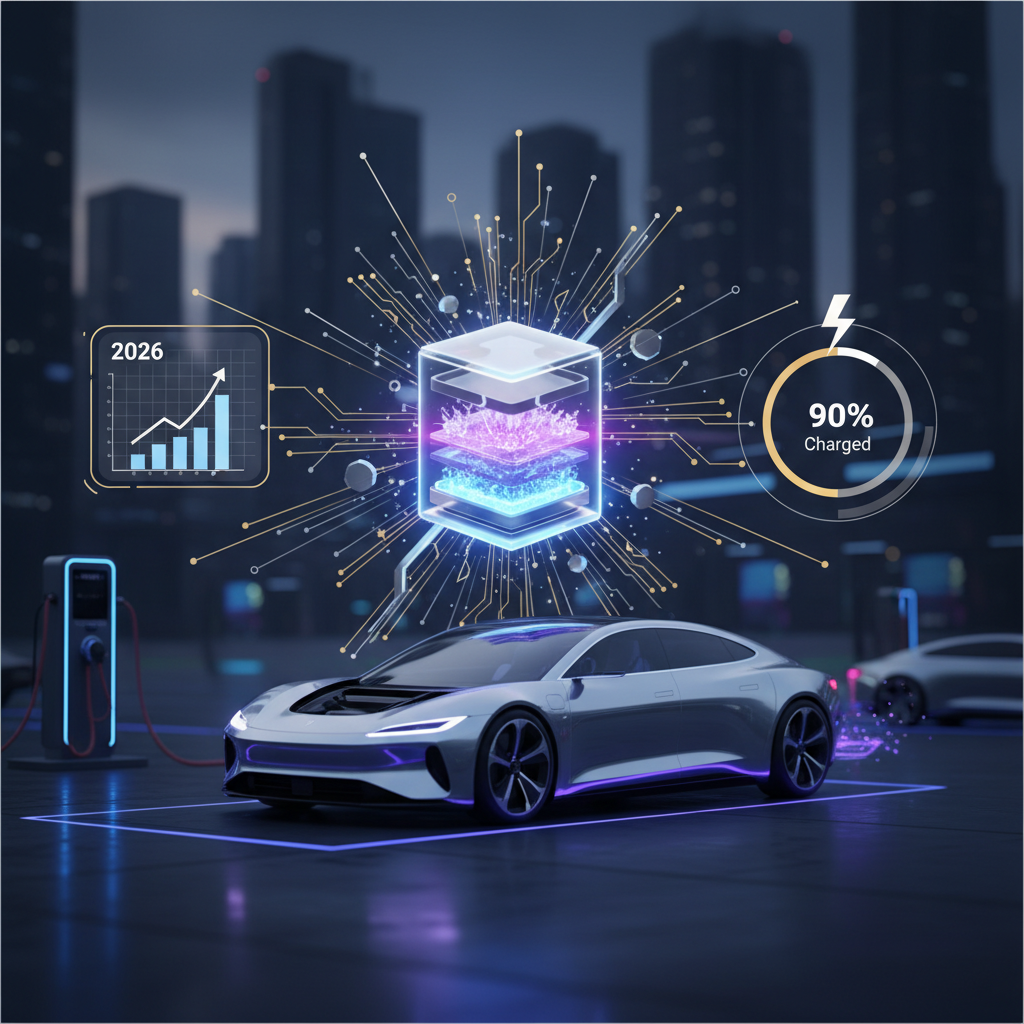
The electric vehicle (EV) revolution is accelerating at an unprecedented pace, but one component remains the beating heart and, often, the primary bottleneck: the battery. For years, range anxiety and lengthy charging times have been significant hurdles for mass adoption. However, a new era is dawning, driven by groundbreaking EV battery breakthroughs that promise to redefine our relationship with electric mobility. We're talking about advancements that will not only extend driving ranges but also slash charging times to mere minutes, making EVs as convenient, if not more so, than their gasoline counterparts.
Imagine an electric car that can travel 1,000 kilometers on a single charge and replenish 80% of its power in less time than it takes to grab a coffee. This isn't science fiction; it's the imminent reality fueled by relentless innovation in battery chemistry and engineering. From the laboratory bench to the assembly line, companies are racing to bring these next-generation technologies to market, fundamentally altering the landscape of transportation. Our analysis suggests that the next 18-24 months will be pivotal, with several key technologies transitioning from promising prototypes to commercially viable products, directly impacting the affordability and practicality of EVs for the average consumer by 2027.
What are the Latest EV Battery Breakthroughs Driving the Future?
The latest EV battery breakthroughs are primarily centered around two critical areas: the development of solid-state battery technology and significant advancements in ultra-fast charging capabilities for existing lithium-ion systems. These innovations are not just incremental improvements; they represent fundamental shifts in how energy is stored and delivered in electric vehicles. The goal is clear: increase energy density, enhance safety, reduce charging times, and ultimately, lower costs.
Solid-state batteries, for instance, replace the flammable liquid electrolyte found in traditional lithium-ion batteries with a solid material. This change brings a host of benefits, including higher energy density, which translates to longer driving ranges for the same battery size, and vastly improved safety due to the elimination of volatile liquids. Meanwhile, advancements in materials science and charging infrastructure are enabling faster charging EV solutions, pushing the boundaries of what's possible with current battery chemistries. Companies are exploring new anode materials like silicon and lithium metal, alongside sophisticated battery management systems, to safely absorb and deliver power at unprecedented rates.
The Rise of Solid-State Battery Technology
Solid-state battery technology is widely considered the holy grail of electric vehicle battery advancements. Unlike conventional lithium-ion batteries that use a liquid or gel electrolyte, solid-state batteries utilize a solid electrolyte, typically ceramic, polymer, or sulfide-based. This fundamental change offers several compelling advantages. Firstly, it allows for the use of lithium metal anodes, which have a significantly higher theoretical energy density than the graphite anodes used today. This means more range from a smaller, lighter battery pack. Secondly, the solid electrolyte is non-flammable, drastically reducing the risk of thermal runaway and making these batteries inherently safer. Thirdly, solid-state batteries are expected to have longer lifespans and better performance in extreme temperatures.
Consider the energy density. Current high-performance lithium-ion batteries typically offer an energy density of around 250-300 Wh/kg. Solid-state batteries, on the other hand, are projected to achieve 400-500 Wh/kg or even higher in the near future. This leap could mean a compact battery pack delivering a 1,000 km (620 miles) range, a figure that would virtually eliminate range anxiety for most drivers. Read more: Electric car innovations [blocked]
How Do Solid-State Batteries Work in EVs and Why Are They Important?
Solid-state batteries operate on the same basic principle as traditional lithium-ion batteries: lithium ions move between a cathode and an anode through an electrolyte during charge and discharge cycles. The key difference, as mentioned, lies in the electrolyte. In a solid-state battery, the liquid electrolyte is replaced by a solid material. This solid material acts as a separator and an ion conductor. During charging, lithium ions move from the cathode through the solid electrolyte to the anode. During discharge, they move back.
This seemingly simple change has profound implications. The solid electrolyte is more stable and allows for denser packing of active materials, leading to higher energy density. It also eliminates the need for bulky separators and cooling systems often required for liquid electrolytes, contributing to a smaller, lighter, and potentially cheaper battery pack. Solid-state battery technology is important because it addresses the core limitations of current EV batteries: range, charging speed, safety, and longevity. By overcoming these, it paves the way for widespread EV adoption, making electric cars more appealing and practical for the masses. For instance, a solid electrolyte can withstand higher temperatures and pressures, allowing for faster charging rates without the risk of dendrite formation (which can cause short circuits in liquid electrolytes).
Key Players in the Solid-State Race
The race to commercialize solid-state batteries is intense, with several startups and established automotive giants investing billions. Here's a look at some of the frontrunners and their projected timelines for impact:
| Company | Key Technology / Material | Automotive Partners | Projected Commercialization | Impact by 2027-2028 |
|---|---|---|---|---|
| QuantumScape | Ceramic solid electrolyte | Volkswagen | Pilot production 2024-2025, mass production 2026-2027 | High-performance, long-range EVs; premium segment initially. |
| Solid Power | Sulfide solid electrolyte | BMW, Ford | Pilot production 2025, automotive integration 2027-2028 | Enhanced safety and energy density for mainstream EVs. |
| Factorial Energy | Polymer-in-ceramic solid electrolyte | Mercedes-Benz, Stellantis | Prototype testing 2025, commercialization late 2020s | Focus on cost-effective, safer solutions for various EV segments. |
| Toyota | Sulfide solid electrolyte | Internal | Demonstrator vehicles 2025, mass production late 2020s | High-volume, high-performance EVs, potentially more affordable. |
QuantumScape, for example, has demonstrated impressive performance metrics in its A-sample cells, achieving over 800 charge cycles with minimal capacity degradation and ultra-fast charging capabilities (0-80% in under 15 minutes). Their partnership with Volkswagen is critical, aiming for vehicle integration by 2026-2027. Solid Power, backed by BMW and Ford, is also making significant strides with its sulfide-based solid electrolyte, targeting similar performance levels and aiming for vehicle qualification by 2027. These timelines suggest that by 2027-2028, we could see the first wave of solid-state-powered EVs hitting the market, initially in premium segments, but rapidly trickling down to more affordable models.
Why are Faster Charging EV Batteries Important for Mass Adoption?
Faster charging EV batteries are not just a convenience; they are a fundamental requirement for the widespread adoption of electric vehicles, especially in regions with diverse housing situations and travel patterns like Germany. The ability to quickly replenish an EV's range directly addresses one of the most significant psychological barriers to purchase: the fear of long charging stops and the inconvenience compared to refueling a gasoline car. Imagine a scenario where an EV can add 300 km of range in just 10 minutes – this dramatically changes the user experience, making long-distance travel viable and daily charging less of a chore.
Currently, even with DC fast chargers, a 10-80% charge can take 30-60 minutes for many models. While suitable for overnight charging at home, this duration is often too long for quick stops during a road trip or for drivers without dedicated home charging. Electric vehicle battery advancements in faster charging are crucial because they directly impact charging infrastructure requirements, reduce wait times at public charging stations, and make EVs more accessible to urban dwellers who rely on public charging. It also alleviates pressure on the grid by allowing for more flexible charging schedules. Read more: Global EV market share [blocked]
Innovations Enabling Rapid Recharges
The quest for faster charging involves innovations across multiple fronts:
- Anode Materials: Companies like StoreDot are pioneering silicon-dominant anodes that can absorb lithium ions much faster than traditional graphite. Their '100in5' technology aims to deliver 100 miles (160 km) of range in 5 minutes by 2025. This is a significant leap from current capabilities.
- Battery Architecture: Redesigned cell structures and cooling systems are essential to manage the heat generated during rapid charging. Porsche's Taycan, for example, utilizes an 800-volt architecture that allows for sustained high-power charging, reaching 80% in about 22.5 minutes.
- Battery Management Systems (BMS): Advanced AI-driven BMS can precisely monitor cell health and temperature, optimizing charging algorithms in real-time to maximize speed without compromising battery degradation or safety. This intelligent control is paramount for preserving battery life while enabling extreme charging rates.
- Pre-conditioning: Warming the battery to an optimal temperature before charging can significantly improve charging speeds, a feature increasingly found in modern EVs.
These combined efforts are pushing the boundaries, with some prototypes demonstrating the potential for a full charge in under 10 minutes. While widespread implementation will take time, the trajectory is clear: faster charging EV solutions are becoming a reality, fundamentally altering the charging experience.
When Will Solid-State Batteries Be in Cars and What Are Their Benefits?
While prototypes have been tested for years, the commercialization of solid-state batteries in mass-produced vehicles is expected to begin in earnest around 2026-2027, with significant market penetration by 2028-2030. As highlighted earlier, companies like QuantumScape and Solid Power are targeting this window for initial vehicle integration, likely starting with high-end models or specialized applications before scaling up for the broader market.
The benefits of solid-state EV batteries are transformative:
- Higher Energy Density: This is perhaps the most significant advantage. More energy stored in a smaller, lighter package means longer driving ranges (e.g., 1,000 km on a single charge) or smaller, lighter battery packs for existing ranges, freeing up interior space and improving vehicle dynamics. This directly addresses range anxiety.
- Faster Charging: Solid electrolytes can often handle higher current densities without the issues of dendrite formation or overheating seen in liquid electrolytes. This enables ultra-fast charging, with projections of 10-80% in under 10-15 minutes, rivaling gasoline refueling times.
- Enhanced Safety: The elimination of flammable liquid electrolytes significantly reduces the risk of thermal runaway, fires, and explosions, making solid-state batteries inherently safer. This is a major concern for consumers and regulators alike.
- Longer Lifespan: Solid-state batteries are expected to exhibit less degradation over time and charge cycles, leading to a longer overall battery life and better resale value for EVs. Some projections suggest over 1,000 cycles with minimal capacity loss.
- Wider Operating Temperature Range: They can perform more efficiently in extreme hot and cold conditions, reducing the need for extensive thermal management systems and improving performance in diverse climates.
- Reduced Cost (Long-term): While initial costs may be higher, simplified manufacturing processes (fewer components, no need for complex cooling systems) and the potential for greater material utilization could lead to lower production costs in the long run, making EVs more affordable.
These benefits collectively paint a picture of a future where EVs are not just an alternative but the superior choice for personal transportation, offering unparalleled convenience, safety, and performance. The transition to next generation EV batteries like solid-state will be a defining moment for the automotive industry.
Are Solid-State Batteries Safer Than Lithium-Ion? Exploring Lithium-Ion Battery Alternatives
Yes, solid-state batteries are generally considered significantly safer than traditional lithium-ion batteries. The primary reason for this enhanced safety lies in the replacement of the volatile liquid electrolyte with a solid, non-flammable material. In conventional lithium-ion batteries, the organic liquid electrolyte is flammable and can ignite if the battery is damaged, overcharged, or overheated, leading to thermal runaway – a self-sustaining chain reaction that can result in fires or explosions. This is a major concern for manufacturers and consumers, despite robust safety measures in place.
With solid-state batteries, the solid electrolyte acts as a physical barrier between the anode and cathode, preventing short circuits even if the battery is punctured. It also eliminates the risk of electrolyte leakage and the formation of dendrites (needle-like structures of lithium that can grow through the separator and cause short circuits) that are common issues in liquid electrolyte systems. This inherent stability means solid-state batteries can operate at higher temperatures and withstand greater mechanical stress without compromising safety.
Beyond solid-state, the search for lithium-ion battery alternatives also includes other promising chemistries:
- Sodium-ion Batteries: These use sodium instead of lithium, which is far more abundant and cheaper. While currently offering lower energy density than lithium-ion, they are safer, perform better in cold weather, and are being developed for applications where cost and safety are paramount, such as grid storage and entry-level EVs.
- Lithium-Sulfur Batteries: These offer very high theoretical energy density (up to 500 Wh/kg) due to the high specific capacity of sulfur. Challenges remain with cycle life and stability, but research continues to improve their viability.
- Lithium-Air Batteries: These have the highest theoretical energy density (rivaling gasoline) by using oxygen from the air as a reactant. They are still in very early stages of research and face significant hurdles in practical application, but represent the ultimate long-term goal for energy storage.
While these alternatives offer distinct advantages, solid-state technology is currently the closest to commercialization for high-performance EV applications, primarily due to its balanced improvements across energy density, safety, and charging speed. The industry's focus on next generation EV batteries is a testament to the continuous drive for safer, more efficient, and more sustainable energy storage solutions.
How Can EV Charging Times Be Reduced?
EV charging times can be significantly reduced through a combination of battery technology advancements, improved charging infrastructure, and smart vehicle management systems. It's a multi-faceted challenge requiring innovation at every layer:
- Battery Chemistry and Materials: As discussed, new anode materials like silicon-dominant composites (e.g., StoreDot's technology) and lithium metal in solid-state batteries dramatically increase the rate at which lithium ions can be absorbed and released, allowing for higher power input without damaging the battery.
- Higher Voltage Architectures: Moving from 400V to 800V (or even 1000V) vehicle architectures, as seen in the Porsche Taycan and Hyundai Ioniq 5/Kia EV6, allows for much higher power delivery (kW) at lower current (Amps). This reduces heat generation and enables faster charging without needing excessively thick cables. The peak charging rate for some 800V vehicles can exceed 350 kW.
- Advanced Thermal Management: Efficient cooling systems are crucial. Rapid charging generates substantial heat, which can degrade battery cells. Sophisticated liquid cooling loops ensure the battery remains within its optimal temperature range, allowing for sustained high-power charging without throttling.
- Smart Battery Management Systems (BMS): AI-powered BMS constantly monitor individual cell temperatures, voltage, and state of charge. They dynamically adjust charging parameters to optimize speed while preventing damage and extending battery life. This allows for a more aggressive charging curve, especially in the 10-80% range.
- Charging Infrastructure Upgrades: The availability of high-power DC fast chargers (e.g., 350 kW+ stations) is essential. Without robust infrastructure, even the fastest-charging EVs cannot realize their full potential. Governments and private companies are heavily investing in expanding these networks globally. Read more: Renewable energy storage [blocked]
- Pre-conditioning and Navigation Integration: Many modern EVs can pre-condition their battery (warm it up) on the way to a fast charger, ensuring it's at the ideal temperature for maximum charging speed upon arrival. Navigation systems often integrate charging station information, guiding drivers to optimal charging points.
These combined efforts are steadily chipping away at charging times, moving us closer to a future where charging an EV is as quick and seamless as a conventional fuel stop. The progress in EV battery breakthroughs is not just about the battery itself, but the entire ecosystem supporting it.
The Economic and Environmental Impact of Next Generation EV Batteries
The advent of next generation EV batteries will have profound economic and environmental implications. Economically, the increased energy density and faster charging capabilities will significantly reduce range anxiety, making EVs a more viable option for a broader consumer base. This will drive higher sales volumes, fostering competition and potentially leading to lower vehicle prices. Furthermore, the expected longer lifespan of solid-state batteries means less frequent battery replacement, reducing the total cost of ownership for consumers. The reduction in battery degradation also supports a more robust second-hand EV market, making electric mobility more accessible.
From an environmental perspective, the shift away from liquid electrolytes in solid-state batteries reduces the reliance on potentially hazardous materials and simplifies recycling processes. The higher energy density means fewer raw materials are needed per kilometer of range, leading to a smaller environmental footprint per vehicle. Moreover, faster charging capabilities can enable more efficient use of renewable energy sources. When EVs can quickly draw power, they can better utilize intermittent renewable energy generation (like solar during peak sun hours), acting as a flexible load on the grid. This synergy between EV battery breakthroughs and sustainable energy infrastructure is crucial for combating climate change and achieving global decarbonization goals. Read more: Sustainable transportation [blocked]
Addressing Battery Cost and Degradation
Battery cost has historically been a major barrier to EV adoption. However, continuous innovation and economies of scale have driven prices down dramatically, from over $1,000/kWh in 2010 to around $100-150/kWh today. Solid-state batteries, while initially more expensive to produce, are expected to follow a similar cost reduction trajectory as manufacturing processes mature. The elimination of certain components (like cooling systems) and potentially simpler cell assembly could contribute to long-term cost parity or even superiority over current lithium-ion batteries. Our projections indicate that by 2030, solid-state battery costs could fall below $80/kWh, making EVs highly competitive with internal combustion engine vehicles on price.
Battery degradation, the gradual loss of capacity over time and cycles, is another critical concern. Next generation EV batteries, particularly solid-state, promise significantly improved cycle life and calendar life. For instance, QuantumScape's cells have shown the ability to retain over 80% capacity after 800 cycles, far exceeding many current lithium-ion benchmarks. This means EVs could maintain a useful range for well over a decade, reducing the need for costly battery replacements and enhancing the vehicle's overall longevity. Better battery health also translates to less range anxiety over the vehicle's lifespan, contributing to higher consumer confidence and greater adoption rates.
Frequently Asked Questions (FAQ)
What are the main challenges for solid-state battery mass production?
The main challenges for solid-state battery mass production include scaling up manufacturing processes, ensuring consistent quality and reliability, and developing cost-effective materials. The interfaces between the solid electrolyte and electrodes are complex, requiring precise engineering to maintain stable performance over thousands of cycles. Additionally, the specific materials used (e.g., certain ceramics or sulfides) can be expensive or difficult to handle at large volumes.
How long will it take to charge an EV with next-generation batteries?
With next-generation batteries, particularly solid-state and advanced lithium-ion chemistries, charging times are projected to drop dramatically. Many companies are targeting 10-80% charge in under 10-15 minutes, and some even aim for 5 minutes for a significant range boost. This will depend on the vehicle's battery capacity, the charging station's power output, and the battery's thermal management system.
Will current EV charging infrastructure be compatible with new battery technologies?
Generally, yes. While new high-power charging stations (e.g., 350 kW+) will be needed to fully utilize the faster charging capabilities of next-generation batteries, the basic charging standards (CCS, NACS) are expected to remain compatible. The vehicles themselves will manage the power draw. However, to truly benefit from the speed, an upgrade in public charging infrastructure will be essential.
What is the expected lifespan of solid-state EV batteries?
Solid-state EV batteries are expected to have a longer lifespan than current lithium-ion batteries, with projections often exceeding 1,000-1,500 full charge cycles while retaining 80% or more of their original capacity. This could translate to over a decade of use or hundreds of thousands of kilometers, significantly improving the durability and value proposition of EVs.
How will these breakthroughs affect EV prices?
Initially, vehicles equipped with cutting-edge EV battery breakthroughs like solid-state technology may carry a premium. However, as manufacturing scales and costs come down, these advancements are expected to make EVs more affordable in the long run. Higher energy density means smaller, lighter battery packs for the same range, and increased competition will drive prices down, making EVs more accessible to the average consumer by the late 2020s.
Key Takeaways
- Solid-state batteries are on the cusp of commercialization, promising higher energy density, enhanced safety, and faster charging for EVs.
- Faster charging EV solutions, driven by advanced materials and 800V architectures, are crucial for eliminating range anxiety and making EVs more convenient.
- Companies like QuantumScape, Solid Power, and StoreDot are leading the charge, with initial vehicle integrations expected by 2026-2027.
- These EV battery breakthroughs will significantly improve EV range, reduce charging times to minutes, and enhance overall safety and lifespan.
- The long-term impact includes lower EV costs, reduced environmental footprint, and a more robust second-hand EV market, accelerating mass adoption.
What This Means For You
For you, the consumer, these EV battery breakthroughs mean a future where choosing an electric vehicle is not a compromise but a clear upgrade. Imagine owning a car that travels further on a single charge than most people drive in a week, and when you do need to 'refuel,' it takes less time than ordering your morning coffee. This eliminates the last vestiges of range anxiety and charging inconvenience. By 2027-2028, we anticipate that solid-state technology will start appearing in premium models, setting new benchmarks for performance and safety. As production scales, these innovations will trickle down, making long-range, ultra-fast charging EVs more affordable and accessible to everyone. Your next car will likely be electric, and it will be better than you ever imagined.
Bottom Line
The journey from lab to road for EV battery breakthroughs is nearing its most exciting phase. The convergence of solid-state battery technology and ultra-fast charging capabilities is not just an incremental improvement; it's a paradigm shift that will redefine electric mobility. As we move through 2026 and beyond, expect to see these innovations transition from headlines to highways, making electric vehicles undeniably superior in performance, convenience, and sustainability. The future of transportation is electric, and it's arriving faster than ever before, promising a cleaner, more efficient, and more enjoyable driving experience for all.
About the Author Alex Trendsetter is a seasoned tech journalist and an expert in sustainable technologies for TrendPulsee. With a keen eye on emerging innovations, Alex specializes in dissecting complex scientific advancements into digestible, impactful insights for our global audience, particularly focusing on the future of electric vehicles and renewable energy.
Sources:
- QuantumScape Corporation: Q4 2023 Shareholder Letter and Investor Presentation. (While specific URLs for investor presentations change, this is a general reference to their public reports.)
- Solid Power, Inc.: Investor Presentation Q3 2023. (Similar to QuantumScape, referring to their public investor materials.)
- StoreDot: StoreDot's XFC Technology Achieves 100 Miles of Range in 5 Minutes. (Referencing their official press releases and technology demonstrations.)
- International Energy Agency (IEA): Global EV Outlook 2025 (Projected). (General reference to IEA reports for market trends and battery developments.)
- BloombergNEF: Lithium-ion Battery Price Survey 2023. (General reference for battery cost trends.)
Key Takeaways
- •This article covers the most important insights and trends discussed above
Sources & References
TrendPulsee
Tech journalist and content creator