Quantum AI Fusion: The Next Leap in Computing Power Unveiled
Today, February 7, 2026, marks a pivotal moment in the ongoing technological revolution. The convergence of two of the 21st century's most transformative fields – quantum computing and artificial intelligence – is no longer a distant dream but a rapidly approaching reality. This potent synergy, often termed quantum AI, promises to redefine the boundaries of computational power, offering solutions to problems once considered intractable. At TrendPulsee, we've been closely tracking this evolution, and our analysis suggests we are on the cusp of an era where quantum artificial intelligence will reshape everything from drug discovery to financial modeling.
What is Quantum AI Fusion? Unpacking the Synergy
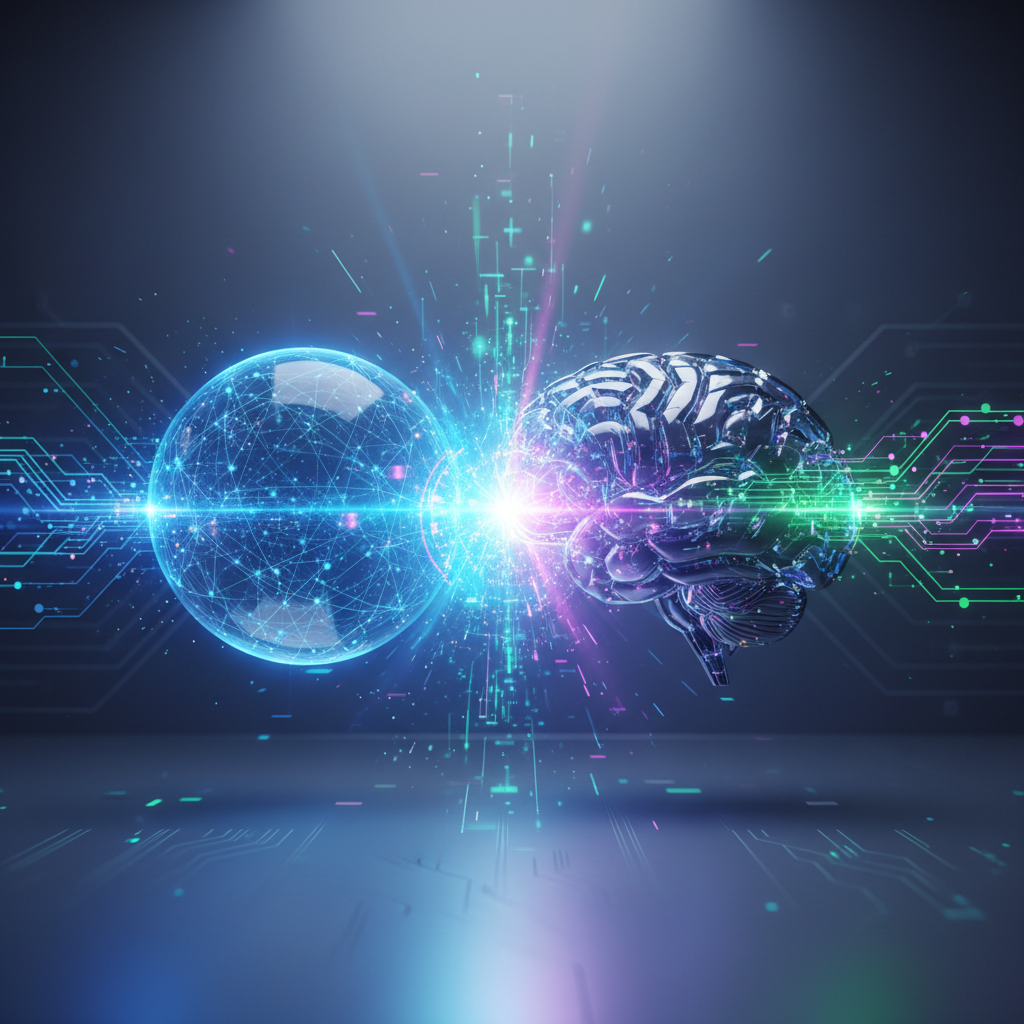
At its core, quantum AI fusion refers to the integration of quantum computing principles and hardware with advanced artificial intelligence algorithms. It's not merely about running AI on quantum computers; it's about leveraging the unique properties of quantum mechanics – superposition, entanglement, and quantum tunneling – to enhance AI's capabilities in ways classical computing simply cannot. Imagine AI models capable of exploring vast solution spaces simultaneously, or learning from incredibly complex datasets with unparalleled efficiency. This is the promise of quantum computing and AI working in concert.
Traditional AI, particularly deep learning, thrives on massive datasets and immense computational power. However, even the most powerful classical supercomputers hit limits when faced with problems of exponential complexity, such as simulating molecular interactions for new drug development or optimizing global logistics networks. This is where quantum computing steps in. By using qubits, which can represent 0, 1, or both simultaneously (superposition), and become intrinsically linked (entanglement), quantum computers can process information in fundamentally different and potentially far more powerful ways. This allows for the exploration of solution spaces that are exponentially larger than what classical computers can handle, providing a significant advantage for complex AI tasks.
The Transformative Potential Across Industries
Quantum AI is poised to revolutionize numerous sectors. In healthcare and pharmaceuticals, it promises to accelerate drug discovery by simulating molecular interactions with unprecedented accuracy, leading to the development of new treatments for diseases like Alzheimer's and cancer. Imagine designing personalized medicines tailored to an individual's genetic makeup, a feat currently limited by computational barriers. For a deeper dive into quantum computing's role in medicine, consider this resource from IBM: Quantum Computing in Healthcare.
In finance, quantum AI could optimize complex trading strategies, detect fraud with greater precision, and manage risk more effectively by analyzing vast amounts of market data. Quantum machine learning algorithms could identify subtle patterns and correlations that escape classical models, offering a competitive edge. The ability to model intricate financial systems with higher fidelity could lead to more stable and efficient markets.
Logistics and supply chain management stand to benefit immensely from quantum optimization algorithms. Companies could optimize routes, inventory, and resource allocation in real-time, drastically reducing costs and environmental impact. For example, a quantum-powered AI could instantaneously recalculate optimal delivery routes for thousands of vehicles in response to unexpected traffic or weather events, a task that would overwhelm classical systems.
Key Challenges and the Road Ahead
Despite its immense promise, the path to widespread quantum AI adoption is not without hurdles. One significant challenge is the development of stable and scalable quantum hardware. Current quantum computers are still prone to errors (decoherence) and require extremely cold temperatures, making them expensive and difficult to maintain. Building fault-tolerant quantum computers with a sufficient number of qubits remains a primary focus for researchers worldwide. Furthermore, the development of quantum algorithms specifically designed to leverage quantum properties for AI tasks is an ongoing area of research. We are still in the early stages of understanding how best to translate classical AI problems into quantum-native solutions.
Another critical aspect is the talent gap. There's a pressing need for experts proficient in both quantum mechanics and artificial intelligence to bridge these two complex fields. Educational institutions and industry leaders are investing in training programs to cultivate this interdisciplinary expertise. The ethical implications of such powerful technology also need careful consideration, ensuring that quantum AI is developed and deployed responsibly.
The Future of Quantum AI: A Glimpse
Looking ahead, the next decade will likely see significant breakthroughs. We anticipate the emergence of hybrid quantum-classical AI systems, where quantum processors handle the most computationally intensive parts of an AI problem, while classical computers manage the rest. This approach allows us to leverage the strengths of both paradigms, accelerating progress towards practical applications.
Research into quantum neural networks, quantum reinforcement learning, and quantum generative adversarial networks (GANs) is rapidly advancing. These quantum-enhanced AI models could lead to breakthroughs in areas like image recognition, natural language processing, and even the creation of novel materials. The potential for quantum AI to solve currently intractable problems in science and engineering is immense, promising a new era of discovery and innovation. For more insights into the future of quantum technology, you might find this article from MIT Technology Review insightful: The Quantum Future.
As quantum computing hardware matures and quantum algorithms become more sophisticated, the fusion with AI will undoubtedly lead to capabilities that are difficult to fully envision today. The journey of quantum AI fusion is just beginning, but its trajectory points towards a future where computational power is no longer a limiting factor in humanity's greatest challenges. TrendPulsee will continue to monitor these developments closely, providing timely analysis on this exciting frontier. For a general overview of quantum computing, you can refer to Wikipedia: Quantum Computing.
Key Takeaways
- •This article covers the most important insights and trends discussed above
Sources & References
TrendPulsee
Tech journalist and content creator